
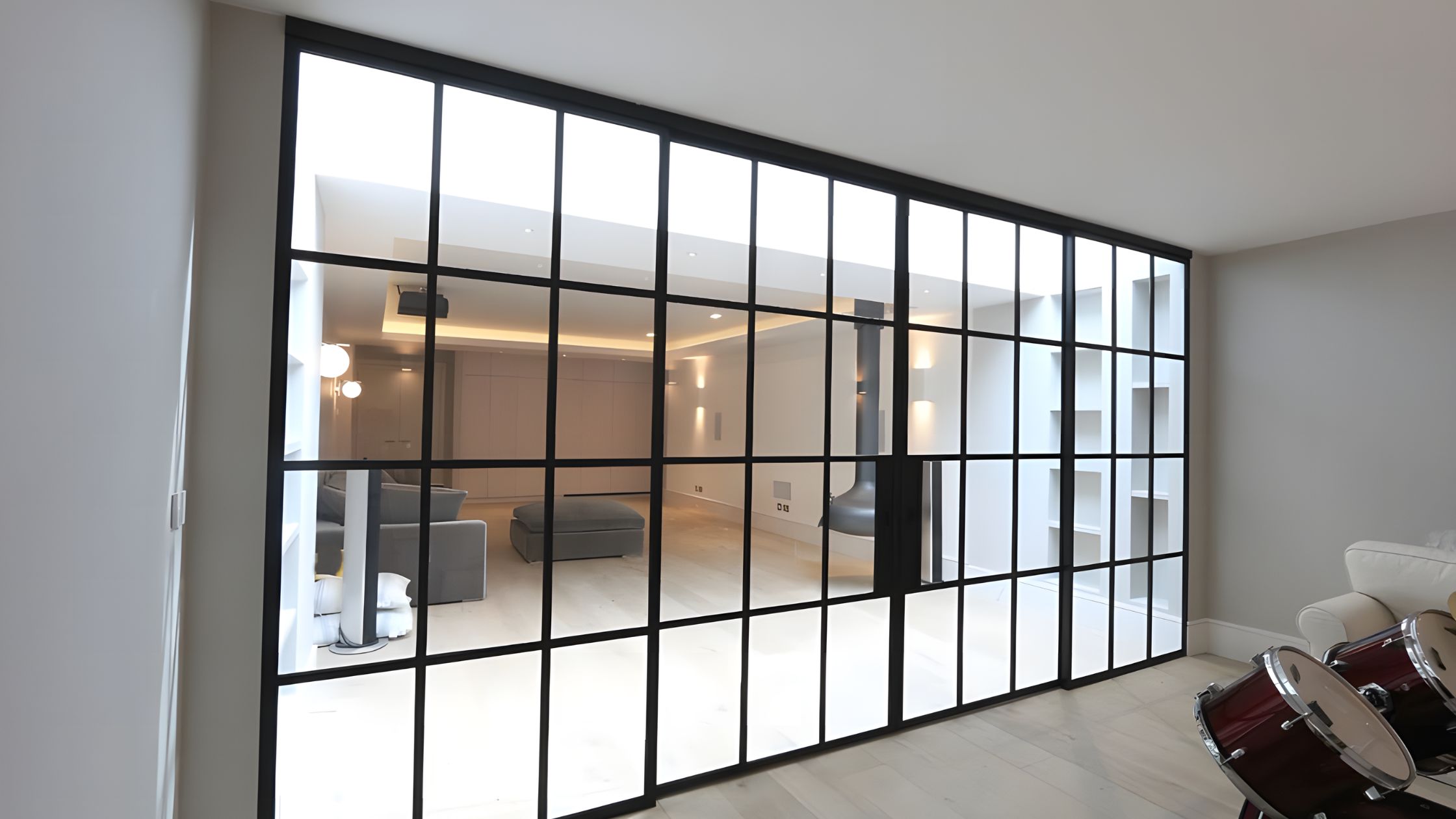
Modern interiors are moving away from heavy brick walls and fixed layouts. Today, both homes and offices demand flexible, lightweight, and visually open solutions. This is where aluminium partitions have become a preferred choice. If you are exploring the types of aluminium partitions available today, it is important to understand how design, structure, and glass compatibility influence performance.
Unlike wooden or gypsum partitions, aluminium systems offer durability, moisture resistance, and long-term structural alignment. They also work seamlessly with different types of glass, including toughened and laminated panels. If you want to understand how glass behaves in structural applications, you can explore this detailed guide on what is toughened glass and where it is used in homes.
What Are Aluminium Partitions?
Aluminium partitions are structural framing systems made using extruded aluminium sections that hold glass, MDF, laminate, or composite panels. These systems divide spaces without blocking light or adding excessive structural weight.
Because aluminium is corrosion resistant and dimensionally stable, it is widely used in both residential interiors and commercial workspaces. In fact, many modern office designs rely heavily on aluminium glass partitions to create transparent cabins and collaborative zones, similar to what we explained in our article on glass partitions in modern office spaces.
Main Types of Aluminium Partitions
1. Aluminium Glass Partition
Among all aluminium partition types, glass partitions are the most common. These systems use aluminium frames to support toughened or laminated glass panels. They are widely used in corporate cabins, meeting rooms, and residential living spaces.
Glass thickness typically ranges between 8 mm to 12 mm depending on panel height. If you are comparing different glass materials for interior applications, our detailed guide on types of glass used in interior design explains how each type performs.
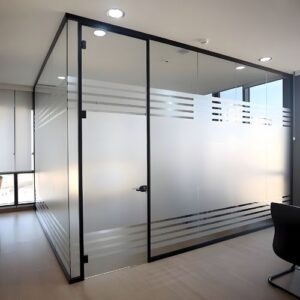
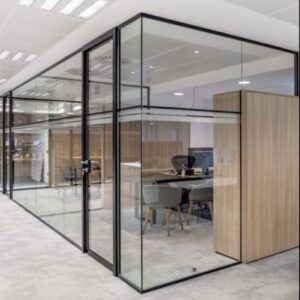
Best for: Offices, living room dividers, study areas
Advantage: Light flow and modern look
Limitation: Requires correct glass thickness for stability
2. Sliding Aluminium Partition
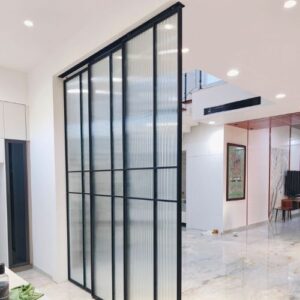
Sliding aluminium partitions operate on track-based systems and are ideal where flexibility is required. These systems allow you to open or close a space depending on need.
They are often used between living and dining areas or in conference rooms where space adaptability matters. Structurally, the aluminium track must support both panel weight and smooth alignment.
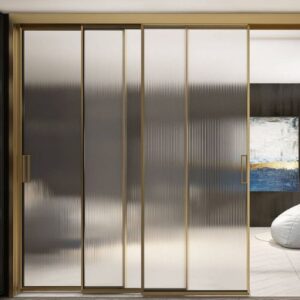
Best for: Flexible layouts
Advantage: Space saving
Limitation: Requires proper alignment and hardware quality
3. Framed Aluminium Partition
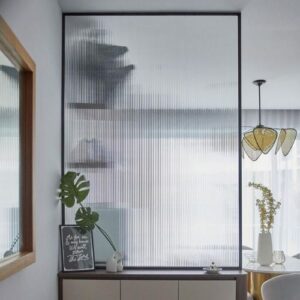
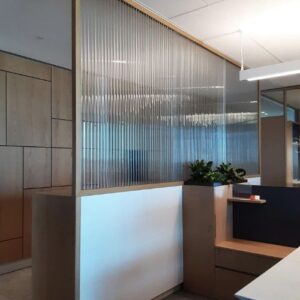
Framed aluminium partitions have visible metal sections around the entire panel. This provides maximum rigidity and structural stability.
They are suitable for taller partitions and high-traffic commercial environments. When structural strength is a priority, framed systems outperform frameless designs.
Best for: Corporate cabins, commercial environments
Advantage: High strength
Limitation: More visible aluminium
4. Framed vs Frameless Types of Aluminium Partitions
A common misconception is that frameless aluminium partitions do not use aluminium at all. In reality, aluminium support is concealed within slim U-channels fixed to the floor and ceiling.
The glass remains visually dominant while aluminium provides anchoring, alignment stability, and vibration resistance. Without these concealed aluminium sections, the glass would not remain structurally secure.
This minimal approach is similar in concept to frameless glass railing systems where structural support is hidden for a cleaner look, as discussed in our guide on glass railings and their structural benefits.
Best for: Modern open interiors
Advantage: Clean and seamless appearance
Limitation: Moderate structural support compared to framed systems
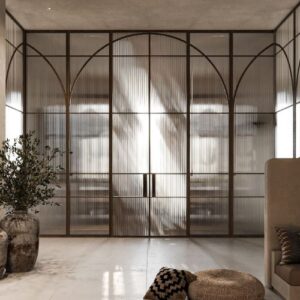
5. Modular Aluminium Partition
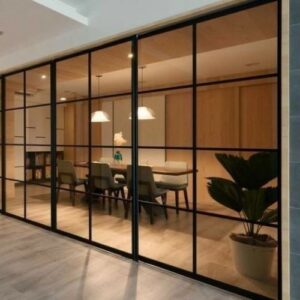
Modular aluminium partitions are pre-engineered systems designed for easy installation and reconfiguration. These are widely used in offices that may need layout changes in the future.
They provide long-term flexibility and lower renovation costs.
Best for: Corporate spaces
Advantage: Reconfigurable
Limitation: Higher initial planning requirement
6. Aluminium Partition with Solid Panels
Not all aluminium partitions are glass based. Some incorporate MDF, laminate, or composite boards within aluminium frames. These systems are ideal where privacy and sound control are priorities.
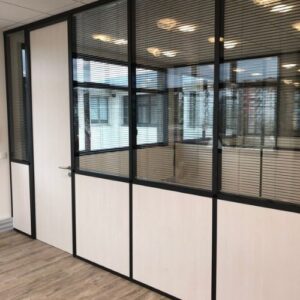
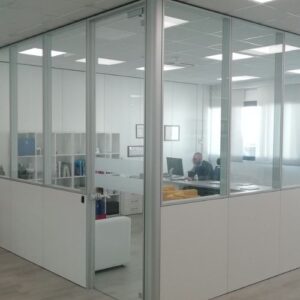
They are commonly used in director cabins or storage areas.
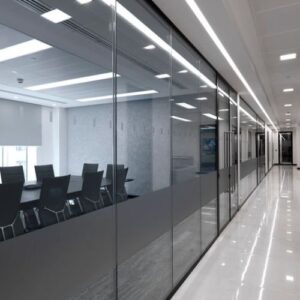
7. Double Glazed Aluminium Partition
Double glazed partitions use two layers of glass separated by an air gap. This improves sound insulation and privacy.
The concept is similar to double glazed window systems used in modern homes. If you are exploring window performance, you may also find our article on types of windows for homes in India useful, as it explains how frame and glass thickness affect performance.
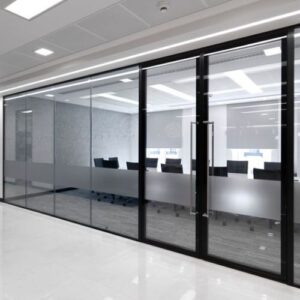
Best for: Conference rooms
Advantage: Better acoustic control
Limitation: Higher cost
Framed vs Frameless Aluminium Partitions
| Feature | Framed Partition | Frameless Partition |
|---|---|---|
| Visible Aluminium | Fully visible frame | Minimal and concealed |
| Structural Strength | High | Moderate |
| Appearance | Defined sections | Clean glass dominant look |
| Best For | Commercial cabins | Modern open interiors |
How to Choose the Right Type of Aluminium Partition
Choosing the right type of aluminium partition depends on several factors:
- Level of privacy required
- Need for sound insulation
- Panel height and structural load
- Glass thickness compatibility
- Budget considerations
If you are already comparing aluminium with engineered systems for better performance, you may also explore how structural aluminium differs from advanced systems in our guide on system windows and their benefits.
Common Mistakes to Avoid
Using very thin aluminium sections for tall partitions can compromise stability. Ignoring glass thickness compatibility may cause alignment issues over time. Selecting purely based on design without evaluating structural support can reduce durability.
Why Types of Aluminium Partitions Are Popular in Modern Interiors
The growing popularity of aluminium partitions comes from their durability, modern appearance, and flexibility in design. Unlike traditional brick or wooden dividers, aluminium partition systems allow natural light to flow through the space while maintaining structural stability. Because of these advantages, many homeowners and businesses now prefer different types of aluminium partitions to create cabins, room dividers, and workspace enclosures.
Conclusion
Understanding the different types of aluminium partitions allows homeowners and businesses to select systems that balance privacy, aesthetics, durability, and flexibility. From framed glass cabins to minimal frameless dividers, each type serves a specific purpose.
When selected correctly, aluminium partitions enhance space functionality while maintaining a modern architectural look.

Ankit Singh is a content writer and interior solutions specialist at Lumora, based in Indore. He writes about glass solutions, window systems, interior design, and architectural materials with a focus on helping homeowners and professionals make informed decisions. With hands-on exposure to residential and commercial glass projects across Indore, Ankit covers topics including toughened glass, UPVC windows, aluminium systems, glass railings, partitions, and modern interior design trends. His writing combines practical field knowledge with clear, accessible explanations for readers at every stage of their project.